


Refresh Your Look with Non-Surgical Facial Rejuvenation
Review Your Non-Surgical Facial Rejuvenation Options
Non-surgical facial rejuvenation can soften dynamic wrinkles, restore facial volume, refine facial contours, and improve overall skin quality without the incisions or extended recovery of surgery. The ideal treatment plan depends on your specific anatomical goals:
- Botox relaxes dynamic expression lines and can soften select muscle-related facial concerns.
- Hyaluronic acid fillers restore lost volume in the midface, smooth nasolabial folds, and refine facial contours.
- IgniteRF delivers targeted radiofrequency energy to support skin firmness and collagen remodeling.
- Microneedling, CO2 laser resurfacing, and chemical peels address tone, texture, fine lines, and sun damage.
These non-surgical treatments work best for individuals with mild-to-moderate laxity, early tissue descent, volume loss, or surface texture concerns. While they cannot replicate the extensive tissue repositioning of surgery, they offer meaningful, natural-looking enhancement.
At Longwood Plastic Surgery, treatment planning begins with a thorough evaluation of your facial anatomy, skin quality, and aesthetic objectives. Our team applies specialized plastic surgery expertise to design safe, customized non-surgical rejuvenation plans.
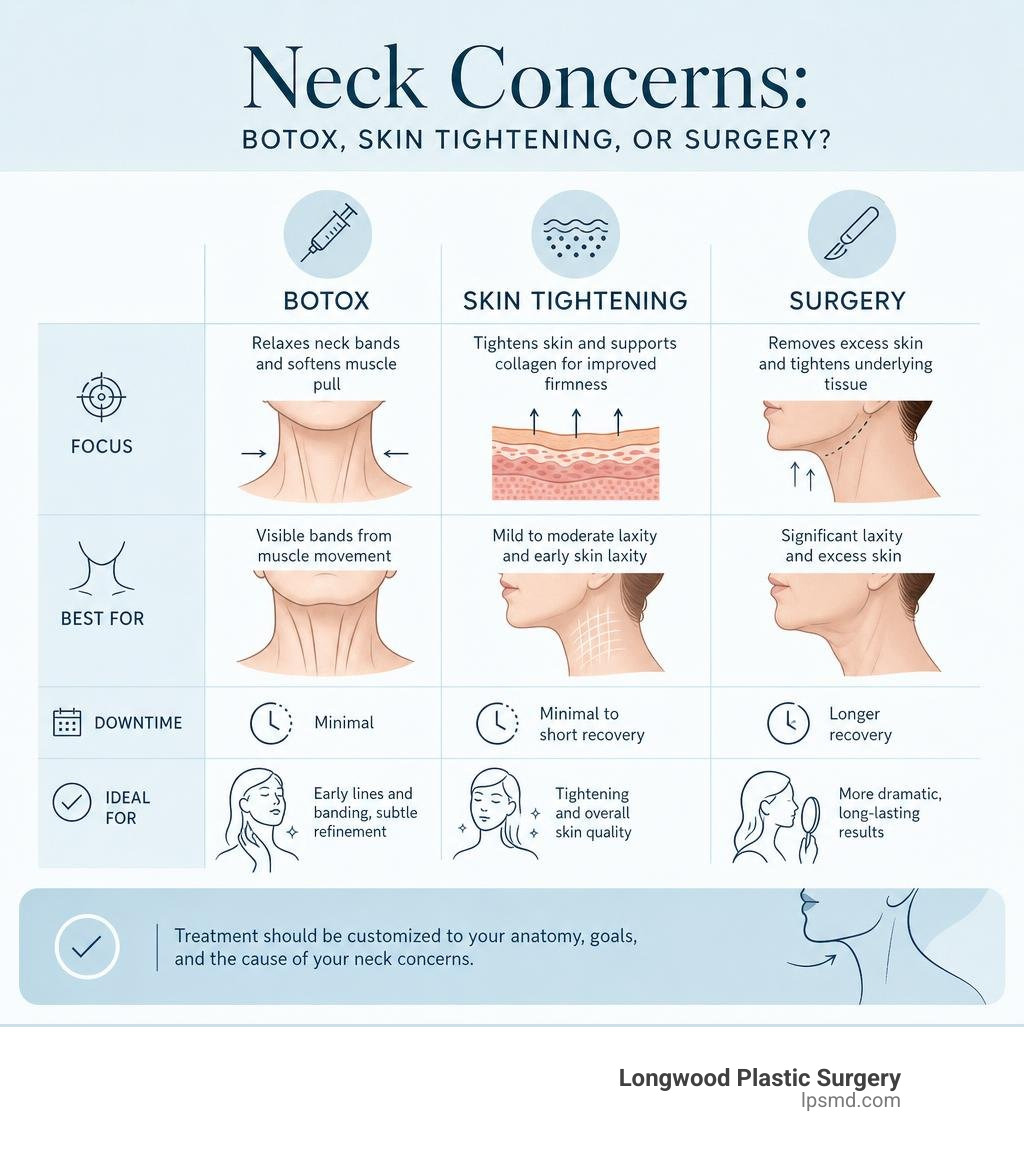
Helpful non-surgical rejuvenation resources:
What Is Non-Surgical Facial Rejuvenation and How Does It Work?
The face and neck naturally exhibit age-related changes over time as collagen production declines, supportive fat compartments shift, and dynamic facial muscles create repetitive tension. Non-surgical facial rejuvenation encompasses an array of minimally invasive and injectable treatments designed to restore contour, smooth wrinkles, and firm skin without general anesthesia or scalpel incisions.
While surgical procedures physically excise redundant skin and reposition deep muscular layers (such as the SMAS or platysma), non-surgical approaches work by relaxing targeted muscles, replenishing lost volume, or inducing natural neocollagenesis.
| Feature | Non-Surgical Facial Rejuvenation | Surgical Face or Neck Lift |
|---|---|---|
| Primary Mechanism | Muscle relaxation, volume restoration, thermal remodeling | Tissue excision, deep structural repositioning |
| Anesthesia Required | Topical numbing or local lidocaine | General anesthesia or twilight sedation |
| Procedure Time | 15 to 60 minutes | 2 to 4 hours |
| Downtime | Minimal to a few days of mild swelling | 2 to 3 weeks of recovery |
| Longevity | 3 to 4 months (neuromodulators) to 1 to 2 years (fillers, RF) | 10 to 15 years |
| Best For | Mild-to-moderate laxity, dynamic lines, volume deficit | Significant skin redundancy, advanced tissue laxity |
For patients seeking refined lower-face and jawline contouring, exploring Nefertiti neck lift techniques demonstrates how targeted neuromodulators relieve downward muscle tension to create a lifted, balanced profile.
The Anatomy of Facial Aging and Muscle Dynamics
Facial and neck aging involves a continuous interplay between elevator muscles (which pull upward) and depressor muscles (which pull downward), such as the platysma muscle along the jawline and neck.
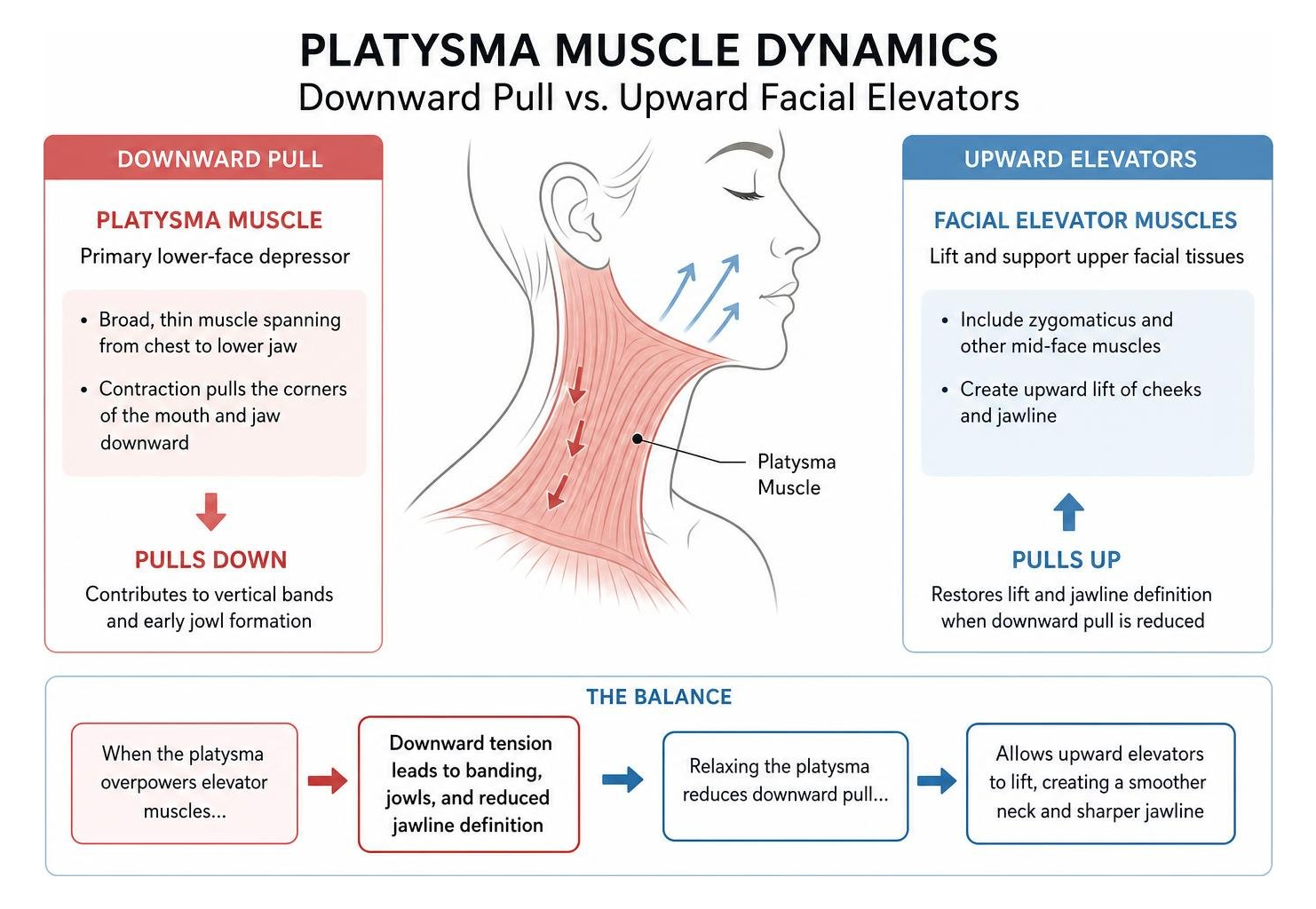
When downward-pulling muscles overpower upward elevators, or when dermal collagen and deep volume diminish, jowling and dynamic lines become more prominent. Non-surgical modalities rebalance these forces, smoothing contours and restoring structural support.
Top Non-Surgical Facial Rejuvenation and Contouring Treatments
Because facial aging affects multiple structural layers, optimal results often involve combining advanced non-surgical cosmetic treatments tailored to dynamic muscle activity, volume depletion, and surface texture.
Neuromodulators and Dermal Fillers
Injectable treatments provide immediate and progressive aesthetic refinement:
- Botox: Relaxes hyperactive dynamic muscles that cause forehead lines, crow’s feet, frown lines, and select expression-related concerns.
- Hyaluronic Acid Fillers: Replenish volume in areas such as the cheeks, temples, and jawline while softening deep nasolabial folds. Understanding liquid facelift longevity helps set realistic expectations for injectable timelines.
Radiofrequency Microneedling and Energy-Based Treatments
When skin laxity or crepiness is the primary concern, appropriate energy-based technologies can help support collagen remodeling and firmer-looking skin:
- IgniteRF: Uses radiofrequency energy to support tissue contraction and collagen remodeling for improved firmness.
- Microneedling: Creates controlled micro-channels in the skin to enhance cellular turnover, texture, and product absorption.
These minimally invasive modalities also provide valuable skin tightening options after weight loss for patients looking to firm early slackness without open surgery.
Resurfacing with CO2 Laser and Chemical Peels
Surface renewal is an essential component of total facial rejuvenation:
- CO2 Laser Resurfacing: Delivers targeted light energy to vaporize damaged outer skin cells while triggering deep collagen production, significantly reducing deep wrinkles, sun spots, and scars.
- Chemical Peels: Exfoliate dull, damaged epidermal layers to reveal smoother, more luminous skin with refined tone and clarity.
Candidacy, Results, and Choosing the Right Provider
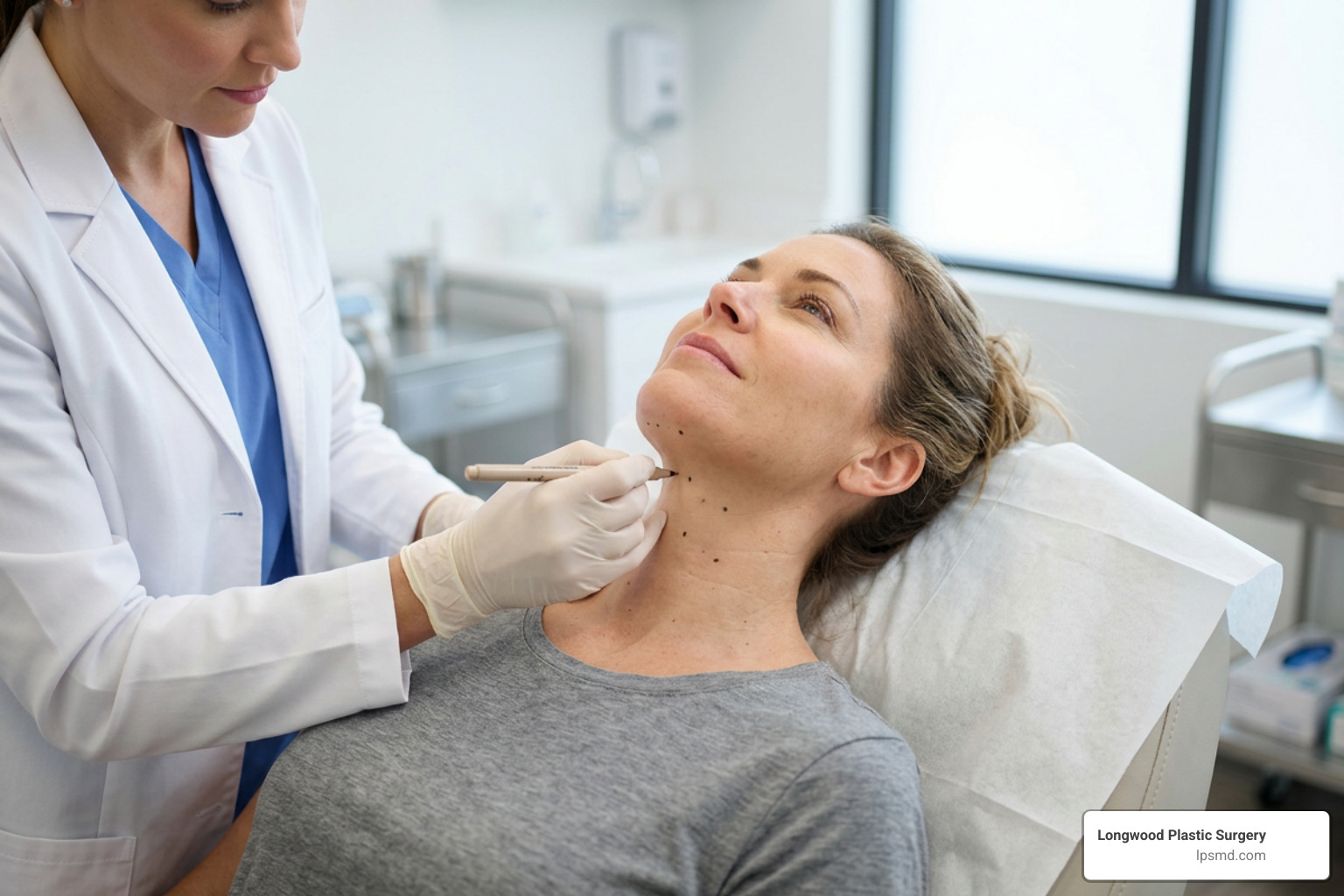
Selecting the right approach begins with identifying whether you are an anatomical candidate for non-surgical rejuvenation or if surgical correction will provide the outcome you desire.
Who Benefits Most from a Non-Surgical Neck Lift?
The ideal candidate for a non-surgical neck lift typically presents with:
- Mild-to-moderate skin laxity: The skin still retains baseline elasticity and snaps back when gently pinched.
- Dynamic platysmal bands: Visible cords that appear prominently when speaking, clenching the jaw, or straining, but soften when the neck is fully relaxed.
- Early jowling: Minor softening of the jawline perimeter without large, heavy deposits of descended fat.
- Age profile: Patients in their 30s, 40s, and 50s who want proactive rejuvenation or subtle correction.
Conversely, patients with extensive skin redundancy (“turkey wattle”), significant structural muscle diastasis (complete midline separation of the platysma), or heavy subplatysmal fat deposits are better served by surgical intervention. Attempting non-surgical tightening on severe laxity leads to underwhelming results and unnecessary expense. Exploring the structural differences in our guide on neck liposuction vs neck lift can help clarify which pathway matches your anatomical profile.
Risks, Side Effects, and Injector Qualifications
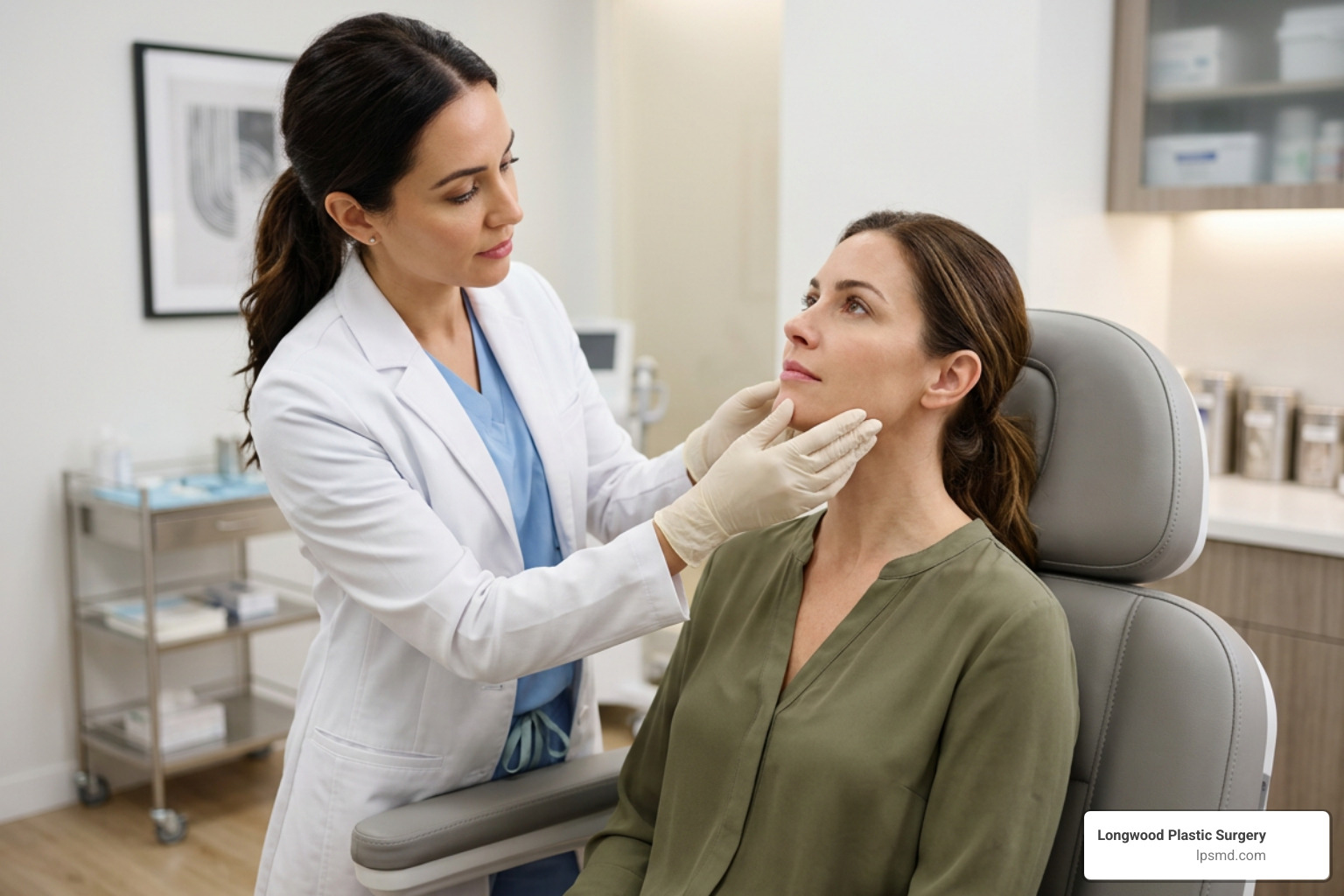
While non-surgical treatments carry significantly less risk than open surgery, lower-face and neck injections demand advanced anatomical knowledge. The neck contains vital nerves, blood vessels, and muscles responsible for speech, swallowing, and airway protection.
Potential Side Effects and Complications:
- Common and Temporary: Mild pinpoint bleeding, localized bruising, transient redness, and slight swelling at injection sites.
- Rare but Serious (due to incorrect technique): If neurotoxins diffuse too deeply or are placed incorrectly, they can affect the sternocleidomastoid muscle, resulting in neck weakness, or infiltrate the pharyngeal constrictors, leading to dysphagia (difficulty swallowing) or hoarseness. Asymmetric lower-lip weakness can also occur if the depressor labii inferioris muscle is inadvertently affected.
To protect your safety, choose an injector working in a doctor-led, board-certified practice. When evaluating prospective providers, ask the following questions during your consultation:
- What specific advanced training do you have in lower-face and neck neuromodulator placement?
- How do you assess whether my neck concerns require surgical intervention instead of non-surgical treatments?
- What protocols and safety measures are in place should I experience an unexpected side effect?
- May I review before-and-after portfolios of patients with neck anatomy similar to mine?
Frequently Asked Questions About Non-Surgical Facial Rejuvenation
How long do results typically last?
Neuromodulator treatments such as Botox typically last three to four months. Over this period, the body naturally metabolizes the botulinum toxin, and treated muscles gradually recover their full activity. For energy-based and skin-quality treatments such as IgniteRF, microneedling, CO2 laser resurfacing, or chemical peels, timelines vary based on the treatment selected, the area treated, and the number of sessions recommended.
Is there any downtime required?
Downtime depends on the treatment. Injectable treatments often involve minimal interruption to daily activities, with possible temporary redness, swelling, or bruising. Microneedling and chemical peels may involve several days of visible redness or peeling, while CO2 laser resurfacing usually requires a more defined recovery period as the skin renews.
When will I see visible improvement?
For Botox, initial softening typically becomes noticeable within several days, with full results settling in around two weeks. Fillers can create visible contour and volume improvement right away, although mild swelling can temporarily affect the final appearance. Skin-quality treatments such as IgniteRF, microneedling, CO2 laser resurfacing, and chemical peels often improve gradually as collagen remodeling and surface renewal progress.
Conclusion
A non-surgical neck lift offers an effective, low-downtime pathway to restore jawline definition, smooth vertical muscle bands, and rejuvenate the lower face. However, achieving balanced, elegant, and safe results requires deep familiarity with the delicate muscular and vascular anatomy of the neck.
At Longwood Plastic Surgery, our team brings over 50 years of combined surgical and aesthetic expertise to every patient evaluation. We take the time to evaluate your unique facial balance and guide you toward the treatment plan that best aligns with your goals, whether that involves non-invasive modalities, skin tightening, or surgical refinement. We invite you to explore non-surgical treatments and schedule your personalized consultation at our Brookline practice today.


