


Which Breast Implants Look and Feel Most Natural?
For many patients seeking breast augmentation in July 2026, the primary goal is no longer just about dramatic volume or a highly visible, rounded appearance. Instead, the modern aesthetic standard heavily favors subtlety, balance, and authenticity. Patients want breasts that blend seamlessly with their unique bodily proportions, move realistically when they walk, run, or lie down, and feel soft and natural to the touch.
The desire for a natural result is deeply personal. Some patients wish to restore volume lost after pregnancy, breastfeeding, or significant weight loss, while others seek to correct natural asymmetry or undergo breast reconstruction. In every case, the goal is to feel comfortable and confident in one’s own skin without the breasts looking obviously operated on.
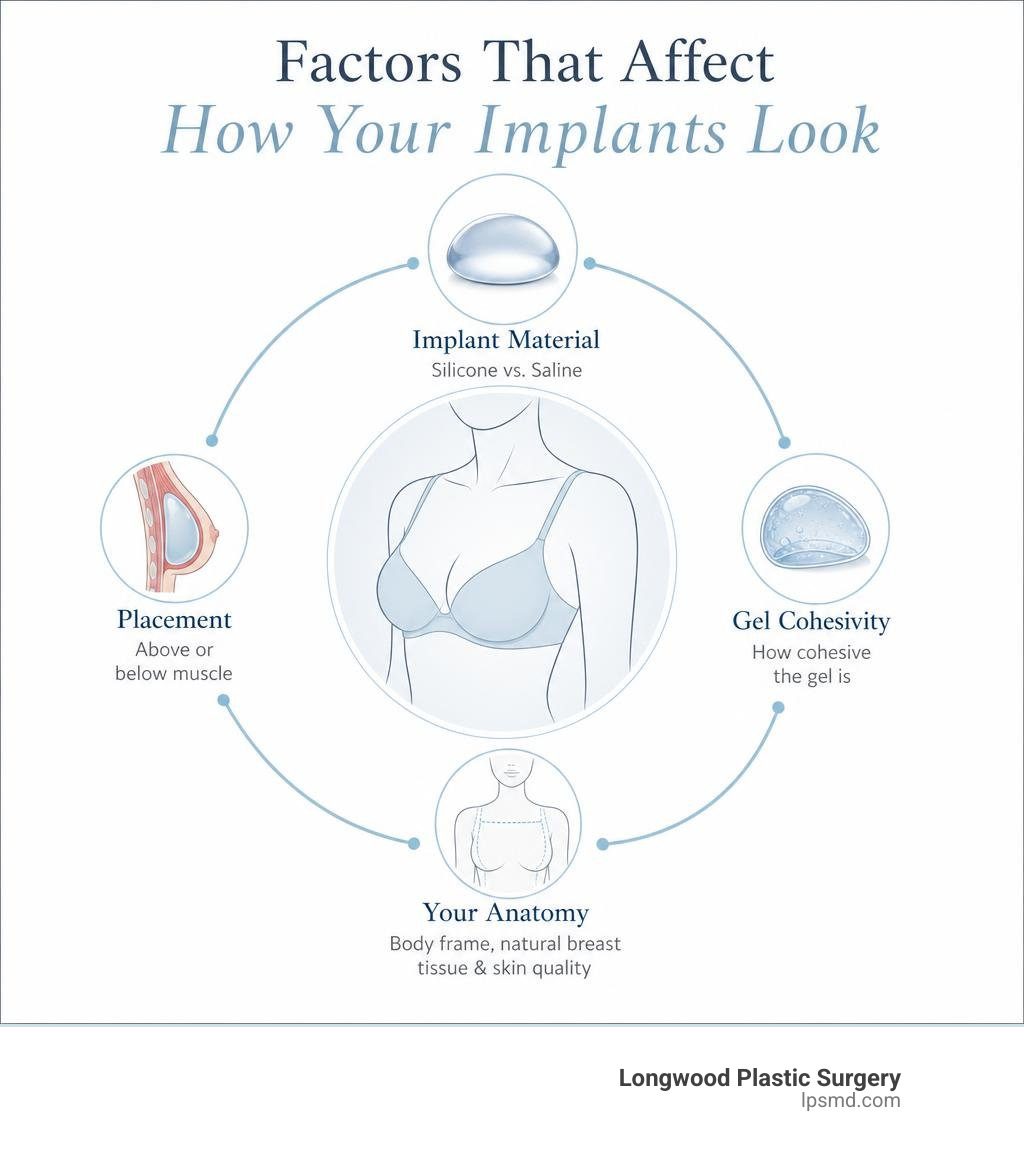
Achieving a result that looks and feels entirely natural is a delicate art and science. It is not determined by a single decision, but rather by a combination of key physical and surgical factors. These include the implant material, the firmness or cohesivity of the filler, the surgical placement relative to the chest muscle, and, perhaps most importantly, the patient’s existing tissue and body frame.
When these elements are carefully aligned, the results can be beautifully indistinguishable from natural breast tissue. In the following sections, we will break down the science behind these choices to help you understand how we customize this procedure for every individual.
How Do Saline and Silicone Implants Compare in Look and Feel?
One of the first decisions you will make is choosing between saline and silicone breast implants. While both options utilize a biocompatible outer shell made of solid silicone elastomer, the material inside the shell creates a completely different tactile and visual experience.
Saline Breast Implants: Structure and Feel
Saline implants are inserted into the breast empty and are filled with sterile salt water (saline) once they are in place. Because saline is a fluid liquid, it behaves differently than natural breast tissue, which is composed of a mixture of soft glandular tissue and cohesive body fat.
Saline implants can sometimes feel firmer to the touch or have a slightly bouncy, water-balloon-like quality. Additionally, because the liquid inside can move freely, saline implants are more prone to wrinkling or rippling. This is especially true if the implant is placed in a patient with very little natural breast tissue to cover it.
Silicone Breast Implants: Structure and Feel
Silicone breast implants are pre-filled by the manufacturer with a cohesive silicone gel. This gel is formulated to mimic the exact density, weight, and elasticity of natural breast fat and glandular tissue. When you touch a silicone implant, it yields to pressure and rebounds in a way that feels remarkably similar to a natural breast.
Because the gel is cohesive, meaning it holds together like a soft solid rather than a liquid, it is far less likely to crease or fold within the shell. This significantly reduces both palpable and visible rippling under the skin.
What the Data Shows
The differences in look and feel between these two materials are well-documented in clinical studies. According to research, 37% of saline implant patients reported feeling ripples through their skin, compared to only 24% of silicone implant patients.
This difference is even more pronounced when it comes to visible rippling, which can compromise the aesthetic outcome. Visible rippling showed up in about 22% of saline cases, whereas it occurred in only 12% of silicone cases.
For a deeper dive into how these materials behave, you can read the scientific research on silicone versus saline feel at Which Implants Feel More Natural: Silicone vs. Saline – ScienceInsights. If you are trying to decide which option aligns best with your lifestyle and aesthetic goals, you can find more information in our guide on Saline vs. Silicone Implants: Which Type is Best for You?.
| Metric | Saline Implants | Silicone Implants |
|---|---|---|
| Fill Material | Sterile salt water (filled during surgery) | Cohesive silicone gel (pre-filled) |
| Tactile Feel | Firmer, can have a liquid-like bounce | Softer, mimics natural tissue and fat |
| Palpable Rippling Risk | Higher (reported by 37% of patients) | Lower (reported by 24% of patients) |
| Visible Rippling Risk | Higher (occurs in about 22% of cases) | Lower (occurs in about 12% of cases) |
| FDA Approval Age | 18 years and older for augmentation | 22 years and older for augmentation |
| Rupture Characteristics | Deflates quickly, saline absorbed by body | “Silent rupture” (gel stays in scar tissue) |
How Does Silicone Gel Cohesivity Affect the Naturalness of an Implant?
If you choose silicone, your options do not stop there. Modern silicone implants come in varying levels of gel firmness, known in the medical community as cohesivity. Cohesivity refers to how strongly the silicone molecules bind to one another.
Understanding the Cohesivity Spectrum
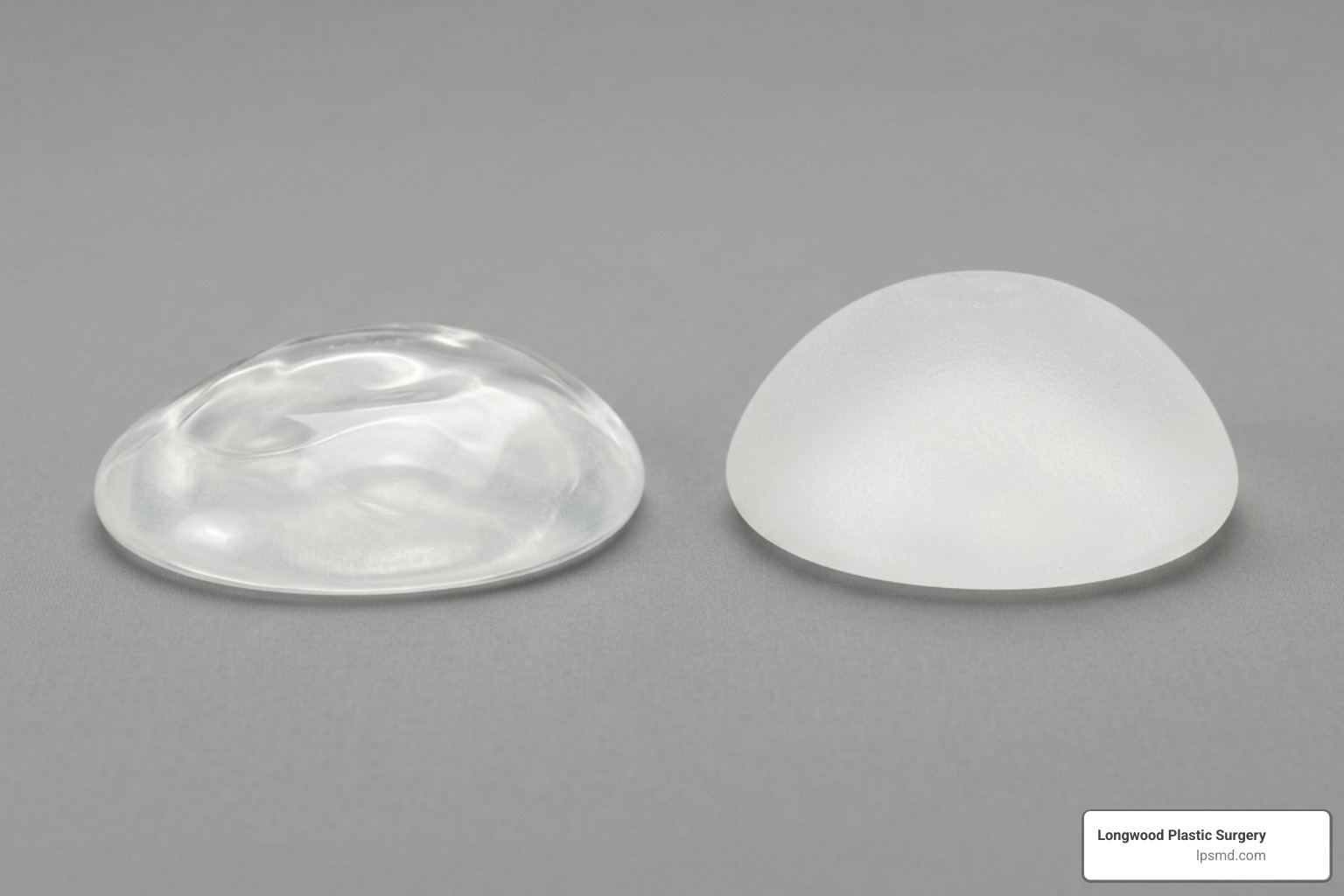
Silicone gel exists on a spectrum from highly fluid, soft gels to highly cohesive, form-stable gels (often referred to as “gummy bear” implants).
- Low-Cohesivity Gels: These are the softest, most liquid-like silicone gels. They feel incredibly soft to the touch and mimic the squishiness of natural breast tissue. However, because the gel is highly fluid, it is more prone to settling at the bottom of the implant shell, which can sometimes lead to visible rippling or a loss of upper-pole fullness over time.
- Moderate-Cohesivity Gels: Often considered the “sweet spot” for many patients, these gels strike a perfect balance. They are soft enough to feel natural when touched, yet cohesive enough to maintain their shape and resist wrinkling.
- High-Cohesivity Gels (Form-Stable): These implants are filled with a thick, cross-linked gel that holds its shape even if the outer shell is cut. Because they are highly structured, they provide excellent projection and resist collapsing under gravity. However, they can feel slightly firmer to the touch than natural breast tissue.
The Tradeoff Between Softness and Shape Retention
Choosing the right level of cohesivity is always a tradeoff. A softer gel feels highly natural to the touch, but it is more prone to settling and showing visible ripples, especially in lean patients. A firmer gel maintains its shape beautifully and resists rippling, but it may feel less pliable when squeezed.
Interestingly, highly cohesive round implants can sometimes produce a shape that is virtually indistinguishable from shaped (teardrop) implants. This is because the firm gel resists flattening under the pressure of the chest wall and gravity, maintaining a soft, natural slope.
To explore how these advanced gel options are shaping modern procedures, you can read more about Breast Augmentation Trends for 2026: What’s New in Implants and Techniques.
How Does Surgical Placement Impact the Final Aesthetic Result?
While the implant itself is crucial, how it is surgically placed inside your breast pocket is equally important. Placement determines how well the edges of the implant are camouflaged by your own tissue, which directly affects both the look and the feel of the breast.
There are three primary placement techniques used today:
1. Subglandular Placement (Over the Muscle)
In this approach, the implant is placed directly behind the natural breast gland but in front of the pectoralis major chest muscle. This placement requires a shorter recovery time and avoids any muscle distortion during physical activity.
However, because the implant is only covered by skin and glandular tissue, its edges may be visible or palpable, particularly at the top of the breast. This option is typically reserved for patients who already have a generous amount of natural breast tissue to act as a cushion.
2. Submuscular Placement (Under the Muscle)
Here, the implant is placed entirely beneath the pectoralis major muscle. The muscle acts as an extra layer of padding, completely covering the top and sides of the implant. This softens the transition from the collarbone to the breast, eliminating the harsh, rounded “top-heavy” look.
Submuscular placement is highly effective at hiding implant edges, reducing the risk of visible rippling, and lowering the rate of capsular contracture.
3. Dual-Plane Placement (The Modern Standard)
Dual-plane placement is a highly sophisticated technique that combines the benefits of both worlds. The upper portion of the implant is placed under the chest muscle for maximum coverage and a soft, natural slope. The lower portion of the implant is left under the breast gland, allowing the implant to settle naturally and move in harmony with the patient’s own tissue.
This technique provides an incredibly natural drape, preventing the implant from looking rigid or sitting too high on the chest.
The clinical data strongly supports placing the implant beneath the muscle for a natural outcome. Over 90% of patients with either saline or silicone implants placed under the chest muscle reported that their breasts looked natural.
To learn more about how placement interacts with size and shape to create a balanced look, see our guide on How to Choose the Right Breast Implant Size and Shape for Natural Results.
How Do Body Type and Existing Breast Tissue Influence the Outcome?
There is no such thing as a one-size-fits-all breast implant. The secret to a truly natural result lies in customizing the surgical plan to fit your unique anatomy and body frame. Your existing breast tissue acts as the “blanket” that covers the implant, and the thickness of this blanket dictates which surgical techniques will yield the best results.
The Clinical Pinch Test
To determine how much natural coverage you have, plastic surgeons use a simple diagnostic tool called the “pinch test.” During your consultation, the surgeon will gently pinch the tissue at the upper and side portions of your breast to measure its thickness in centimeters.
- A pinch test of less than 2 cm indicates minimal natural padding. If you fall into this category, placing an implant over the muscle (subglandular) is highly likely to result in visible implant edges and palpable rippling. To achieve a natural look and feel, a submuscular or dual-plane placement is required to provide the necessary coverage.
- A pinch test of 3 cm or more means you have a substantial layer of natural breast tissue and subcutaneous fat. With this level of padding, a subglandular placement can be highly successful, as your natural tissue is thick enough to cushion and hide the implant.
Frame and Body Type Considerations
Your skeletal frame, chest wall width, and overall body type also play a vital role. If you have a very lean, athletic build with a narrow chest, a large or wide implant will spill over the sides of your breast pocket, looking unnatural and feeling rigid.
Choosing an implant with a profile (how far it projects outward) and diameter that matches your natural breast base width is essential. For patients seeking a highly personalized approach in our local area, you can read more about Which Type of Breast Implant Looks the Most Natural in Boston.
What Is Capsular Contracture and How Does It Affect Long-Term Feel?
When evaluating how natural an implant feels, it is important to look beyond the immediate post-operative period. The long-term feel of your breasts is heavily influenced by how your body heals around the implant over time.
What Is Capsular Contracture?
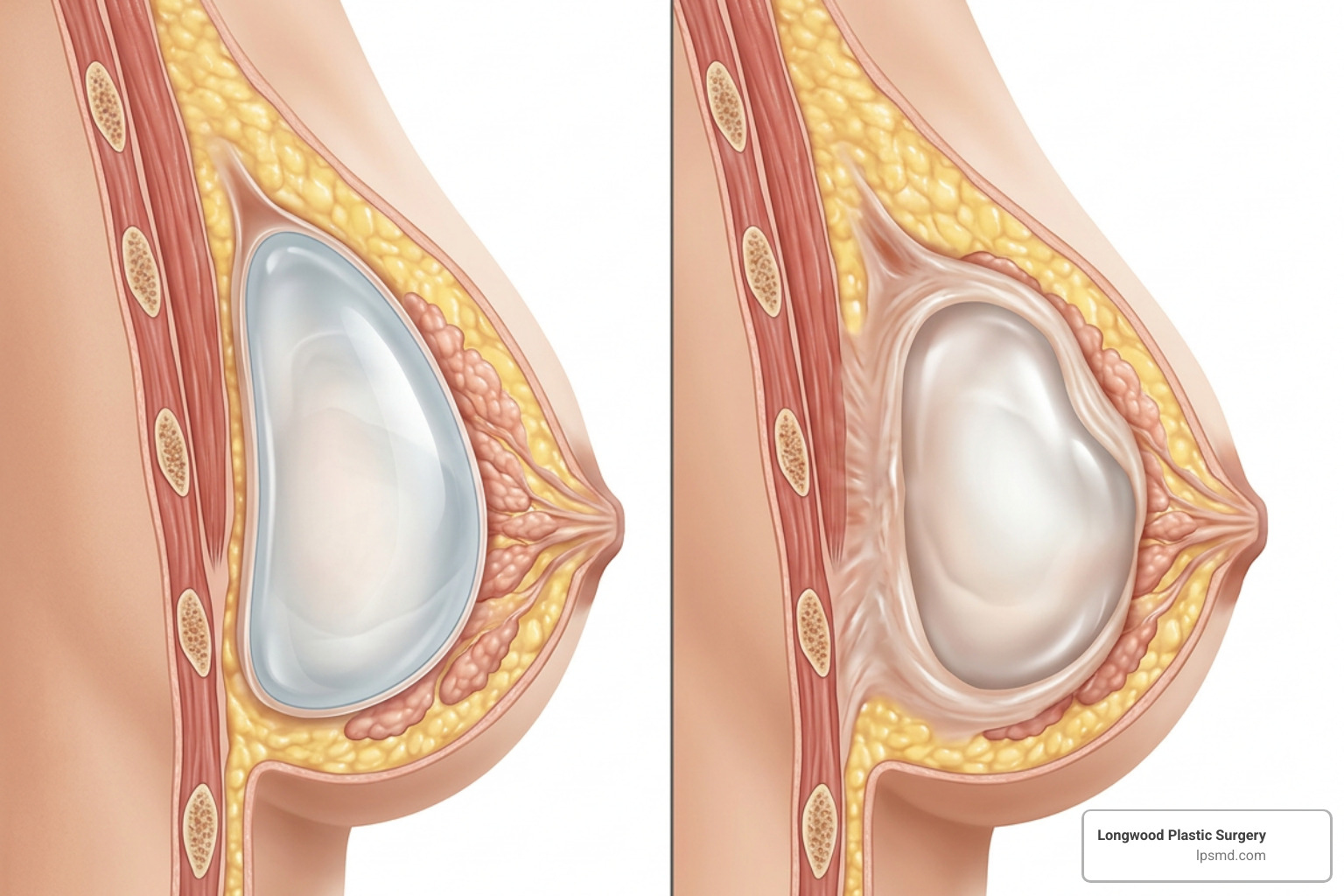
Whenever a foreign object (like a breast implant) is placed in the body, the immune system naturally responds by creating a thin, soft wall of scar tissue around it. This is called a tissue capsule, and it is a completely normal and healthy part of the healing process.
However, in some patients, this scar tissue can become abnormally thick, tight, and inflamed. As the capsule contracts, it squeezes the implant inside. This condition is known as capsular contracture.
How It Changes the Feel of the Breast
As capsular contracture develops, it alters the physical characteristics of the breast. A breast that was once soft and natural-feeling will gradually become firm, hard, or even painful to the touch. In advanced stages, the contracting capsule can compress the implant into a tight, hard ball, pulling it upward on the chest wall and causing visible distortion or asymmetry.
Understanding the Risks and Prevention
Capsular contracture is one of the most common reasons implants stop feeling natural over time. Overall rates of capsular contracture vary widely, from 15% to 45% depending on the study, with the vast majority of cases developing within the first year after surgery.
Fortunately, modern implant designs have significantly reduced this risk. Cohesive silicone gel implants, particularly those with advanced shell technologies, are associated with much lower rates of contracture. Studies show that capsular contracture rates for cohesive silicone gel implants range from only 0% to about 14% across multiple clinical trials.
Choosing a highly skilled surgeon who uses meticulous, sterile techniques is one of the best ways to minimize this risk and protect the long-term softness of your results.
How Do Implants Behave During Movement and Physical Activity?
A truly natural breast does not remain rigid; it moves dynamically in response to your body’s motion. When you walk, run, jump, or lie down, natural breast tissue shifts and settles under the influence of gravity.
Dynamic Behavior of Implants
Older generations of breast implants, or those that are overfilled, can sometimes behave stiffly, remaining high and round on the chest even when you lie flat on your back. This can be a giveaway that a patient has implants.
Modern cohesive silicone gel implants are engineered to mimic this dynamic behavior. When you stand, the gel settles slightly downward to create a soft, natural teardrop slope. When you lie down, the gel spreads gently outward toward the underarms, just like natural breasts.
The Impact of Implant Weight
For active individuals, the physical weight of an implant is a major consideration. Standard breast implants can feel heavy, putting continuous downward pressure on the delicate skin and supportive tissues of the breast. Over time, this weight can cause the breast tissue to stretch, leading to premature sagging and a less natural appearance.
To address this, the field of plastic surgery has seen incredible technological advancements. Lightweight implants utilize specialized microsphere technology to reduce the overall mass of the implant by approximately 30% without sacrificing volume or shape.
By reducing the weight of the implant, these devices decrease the dynamic forces placed on the breast tissue during physical activity, reducing bouncing, improving comfort, and protecting the longevity of your natural results. To learn more about these advanced, lightweight options, read our article All About Preserve by Motiva Breast Augmentation.
What Is the Ultimate Combination for the Most Natural Result?

When we synthesize all the clinical data, surgical techniques, and anatomical factors, a clear picture emerges. The combination most consistently associated with a highly realistic look and feel is a moderate-cohesivity silicone gel implant, placed in a dual-plane or submuscular position, and sized proportionally to the patient’s existing frame.
While this combination serves as an excellent baseline, there is no substitute for a personalized clinical assessment. Your unique tissue thickness, chest wall shape, and lifestyle goals must be factored into the final surgical plan.
At Longwood Plastic Surgery, our board-certified plastic surgeons bring more than 50 years of combined clinical experience to every consultation. We believe in offering personalized, safe, and judgment-free care, taking the time to listen to your goals and tailor a surgical approach that enhances your natural beauty.
Frequently Asked Questions About Natural-Looking Implants
Which implants feel more natural, silicone or saline?
Silicone gel implants are widely considered the most natural-feeling option because the cohesive gel closely mimics the density, weight, and elasticity of natural breast tissue and body fat. Saline implants, which are filled with sterile salt water, can sometimes feel firmer or have a slightly bouncy, liquid-like quality. Additionally, silicone implants are far less prone to palpable or visible rippling under the skin.
Does implant placement affect how natural the breast feels?
Yes, surgical placement plays a vital role in how natural the breast feels, especially to the touch. Placing the implant in a submuscular or dual-plane position covers the upper portion of the device with the chest muscle. This extra layer of padding softens the transition at the top of the breast, hides the implant’s edges, and significantly reduces the risk of feeling or seeing ripples.
How long do breast implants last before they need to be replaced?
Breast implants are not lifetime devices and are not guaranteed to last forever. While many patients enjoy their implants for 10 to 20 years without issue, they may eventually need to be replaced or removed due to natural changes in the breast tissue, implant wear, rupture, or capsular contracture.
To ensure long-term safety and detect silent ruptures, the FDA recommends routine monitoring with ultrasound or MRI starting 5 to 6 years after your initial surgery, and every 2 to 3 years afterward for silicone implants.
How Can Longwood Plastic Surgery Help You Achieve Your Aesthetic Goals?
Achieving a breast augmentation result that looks and feels entirely natural requires a deep understanding of human anatomy, a refined artistic eye, and mastery of the latest surgical techniques.
At Longwood Plastic Surgery, we are dedicated to helping you navigate these choices in a safe, supportive, and judgment-free environment. Whether you are seeking to restore volume, correct asymmetry, or undergo reconstruction, our board-certified surgeons will work closely with you to design a customized plan tailored to your body and lifestyle.
We invite you to take the next step in your aesthetic journey. Contact our office today at our Brookline location (serving Boston, Brookline, and the greater Boston area at 235 Cypress St Suite 210 Brookline MA 02445) to schedule your personalized consultation.
To explore our full range of breast and body contouring procedures, please visit our dedicated service pages:
- Learn about our customized approach to Breast Augmentation
- Restore youthfulness and lift with a Breast Lift
- Explore our specialized, compassionate care for Trans-Feminine Top Surgery
- Reclaim your confidence and symmetry with Breast Reconstruction
- Restore your pre-pregnancy silhouette with a personalized Mommy Makeover


