


Plastic Surgery for Men: Are You a Good Candidate?
The Rise and Evolution of Plastic Surgery for Men
Plastic surgery for men encompasses targeted surgical and nonsurgical aesthetic procedures designed to refine facial structure, contour the body, and restore a refreshed, masculine appearance. Evaluating suitability involves assessing an individual’s overall physical health, skin quality, anatomical structure, and personal aesthetic goals. Ideal candidates are non-smokers at a stable weight who seek natural-looking improvements to their physique or facial features.
Aesthetic care has seen a major cultural shift over the past two decades. What was once viewed as an uncommon pursuit has transitioned into a standard component of personal grooming, wellness, and self-care. Industry data shows steady growth in aesthetic procedures among male patients over the past several decades (Lem et al., 2023). Men now pursue both surgical and nonsurgical treatments nationwide in substantial numbers. Recent survey data also shows that younger adult men are especially open to considering cosmetic procedures.
Multiple modern drivers fuel this growing curiosity. Remote work culture and constant high-definition video conferencing (often called the “Zoom effect”) have placed a spotlight on facial features, under-eye fatigue, and neck fullness. Men in competitive career fields also seek to look as vibrant, energized, and capable as they feel. Broader shifts in media and fitness culture have normalized proactive self-care. Rather than seeking dramatic overhauls, the modern male patient prioritizes understated, subtle refinements.
At our practice, patients looking into men’s plastic surgery Brookline often share that their primary motivation is personal well-being: many men seeking aesthetic treatments want to boost their daily confidence and project a well-rested appearance.
Surgical vs. Nonsurgical Decisions
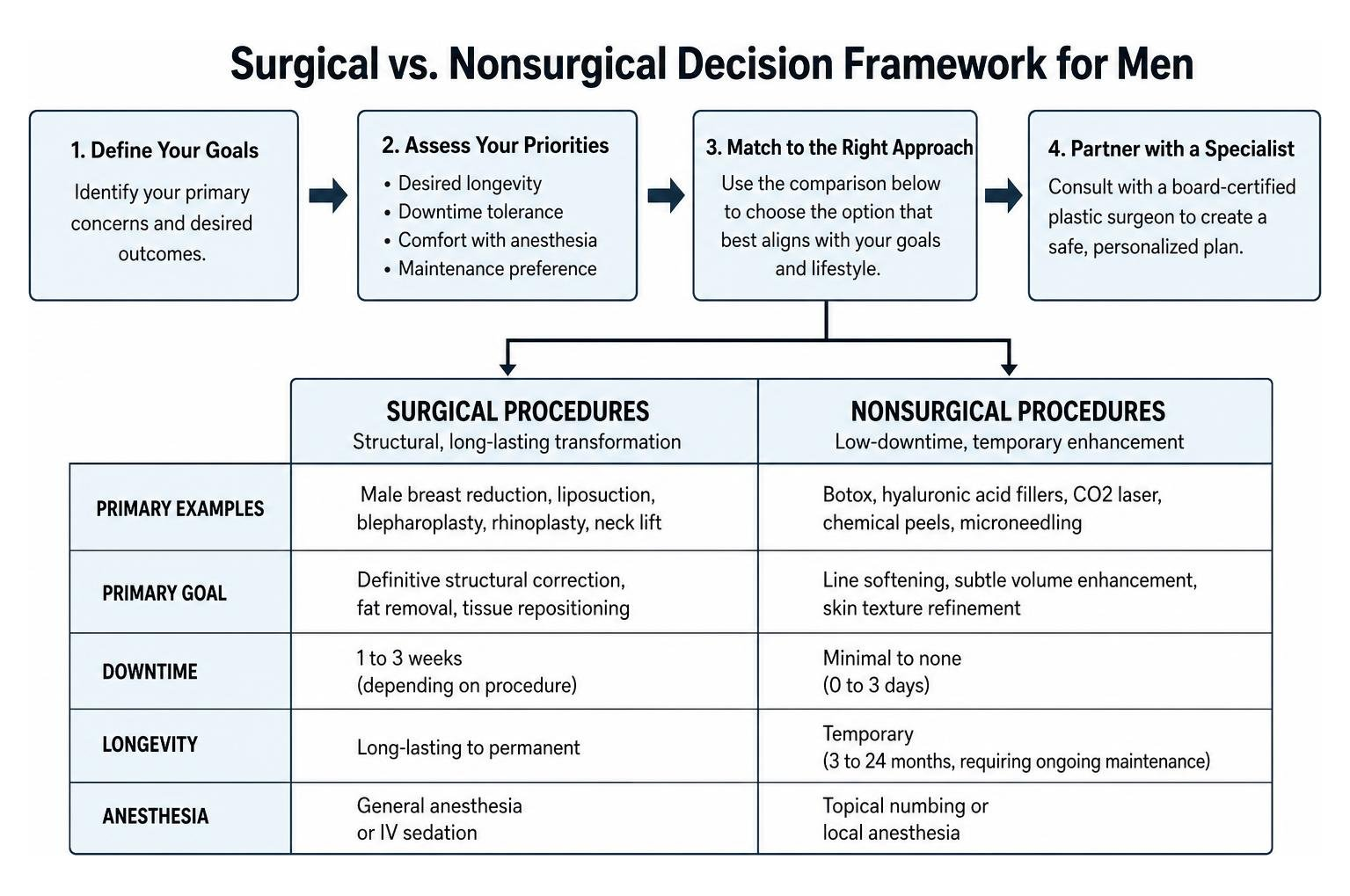
Choosing the right approach requires balancing your specific anatomical goals, available recovery downtime, and desired longevity. Surgical interventions deliver structural, long-lasting transformation by removing excess tissue, repositioning muscles, and tightening contours. Nonsurgical options provide temporary, low-downtime solutions to soften wrinkles, restore minor volume deficits, or improve skin quality.
Nonsurgical treatments such as Botox, hyaluronic acid fillers, microneedling, chemical peels, and CO2 laser skin resurfacing serve as effective entry points. Research tracking male aesthetic interest indicates that non-invasive treatments like jawline filler, Botox, and microneedling have experienced strong growth in search interest over time (Lem et al., 2023). Botox remains among the most common nonsurgical aesthetic procedures for men and has seen substantial long-term growth.
| Feature | Surgical Procedures | Nonsurgical Procedures |
|---|---|---|
| Primary Examples | Male breast reduction, liposuction, blepharoplasty, rhinoplasty, neck lift | Botox, hyaluronic acid fillers, CO2 laser, chemical peels, microneedling |
| Primary Goal | Definitive structural correction, fat removal, tissue repositioning | Line softening, subtle volume enhancement, skin texture refinement |
| Downtime | One to three weeks, depending on procedure | Minimal to none, usually a few days or less |
| Longevity | Long-lasting to permanent | Temporary, with ongoing maintenance needed |
| Anesthesia | General anesthesia or IV sedation | Topical numbing or local anesthesia |
Top Aesthetic Procedures Shaping the Male Market
Men approach aesthetic surgery with precise targets. The surgical goals typically center on building athletic, masculine lines: a strong jawline, a flat and sculpted chest, a contoured midsection, and alert, rested eyes.
When evaluating the most popular cosmetic procedures for men Boston, several interventions consistently lead the field:
- Rhinoplasty: Nose reshaping addresses aesthetic goals, such as reducing a prominent dorsal hump or narrowing the bridge, while frequently correcting internal structural blockages (such as a deviated septum) to improve breathing.
- Blepharoplasty (Eyelid Surgery): Upper and lower eyelid rejuvenation eliminates heavy, drooping skin and smooths under-eye bags, transforming a chronically fatigued look into a refreshed appearance.
- Liposuction: Suction-assisted fat removal eliminates stubborn, diet-resistant pockets across the flanks (“love handles”), abdomen, and submental region beneath the chin.
- Body Contouring: Modern procedures, including abdominal contouring and gluteal enhancements, help sculpt a proportionate physique.
Core Surgical Options in Plastic Surgery for Men
Chest enlargement is a frequent source of physical self-consciousness for men. Gynecomastia, the development of excess glandular tissue and localized fat in the male breast area, affects men of all ages. Understanding what causes gynecomastia? is the first step toward effective treatment; causes range from hormonal fluctuations during puberty or aging to certain medications, genetics, or weight changes.
When determining how is gynecomastia surgery done?, we combine precision techniques. The procedure often involves targeted liposuction to remove fatty tissue, paired with direct surgical excision through a discreet incision along the lower half of the areolar border to excise firm, fibrous glandular tissue. Undergoing male breast reduction surgery creates a flatter, firmer, and more masculine chest contour that allows men to wear fitted clothing and swim with renewed comfort.
Facial Rejuvenation and Anatomical Nuances
Facial surgery for men demands specialized planning because male facial anatomy differs substantially from female anatomy. Men have significantly thicker skin, a denser network of facial blood vessels, stronger underlying musculoskeletal frames, and active hair-bearing skin across the beard and sideburn areas.
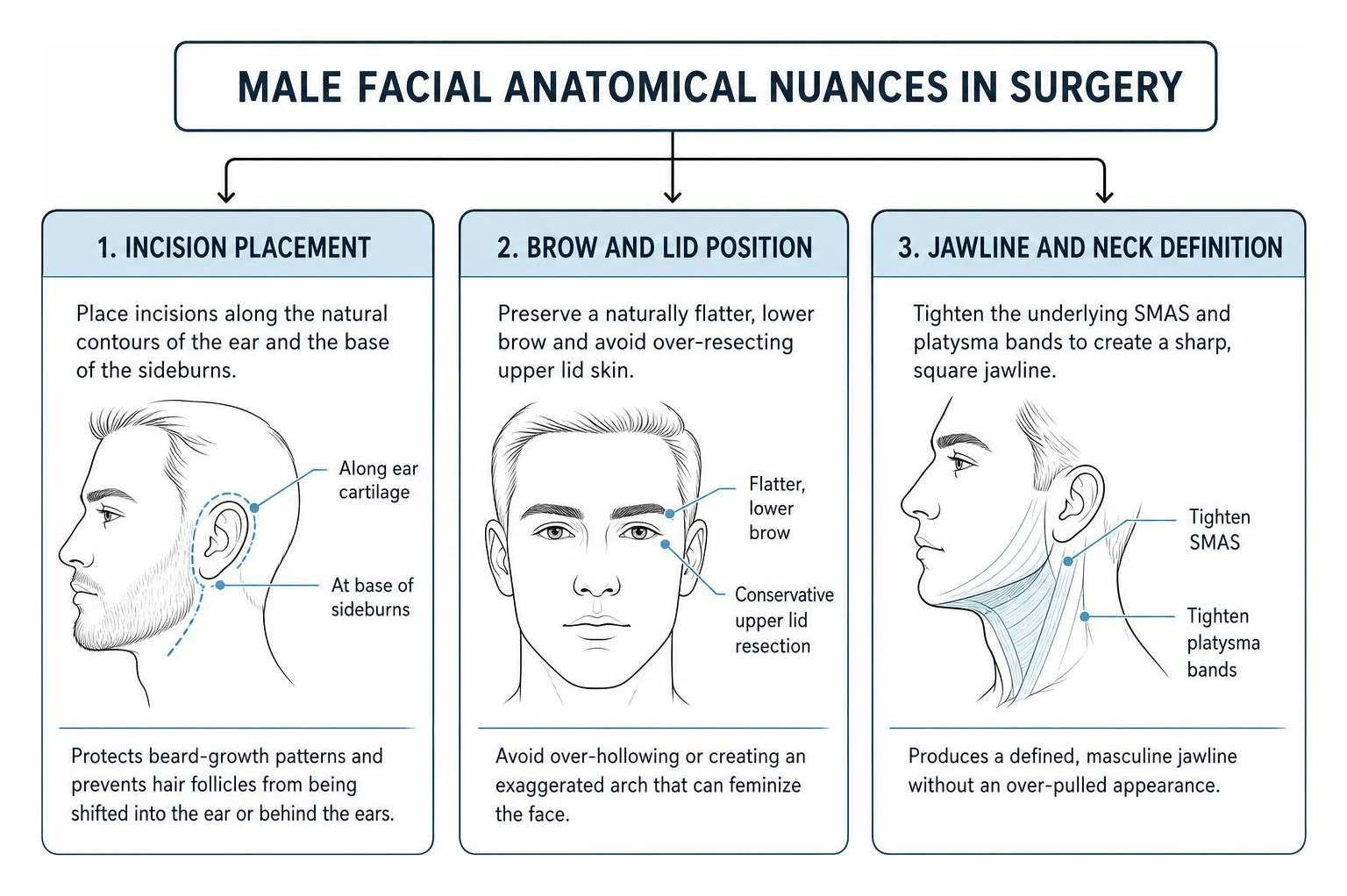
Male facelift patients represent a meaningful portion of the overall facelift population. Surgical execution must account for specific male anatomical traits:
- Incision Placement: Surgical incisions must be strategically placed along the natural contours of the ear cartilage and the base of the sideburns. This protects normal beard-growth patterns and prevents hair follicles from being inadvertently shifted into the ear canal or behind the ears.
- Brow and Lid Position: In male eyelid surgery, the surgeon must preserve a naturally flatter, lower brow architecture and avoid over-resecting upper lid skin. Over-hollowing or creating an exaggerated arch can feminize the face.
- Jawline and Neck Definition: A successful male neck lift or facelift tightens the underlying superficial muscular aponeurotic system (SMAS) and platysma bands to establish a sharp, square jawline without creating an over-pulled appearance.
Selecting procedures tailored to these features is central to the custom surgeries for men performed by our team.
Assessing Candidacy and Recovery
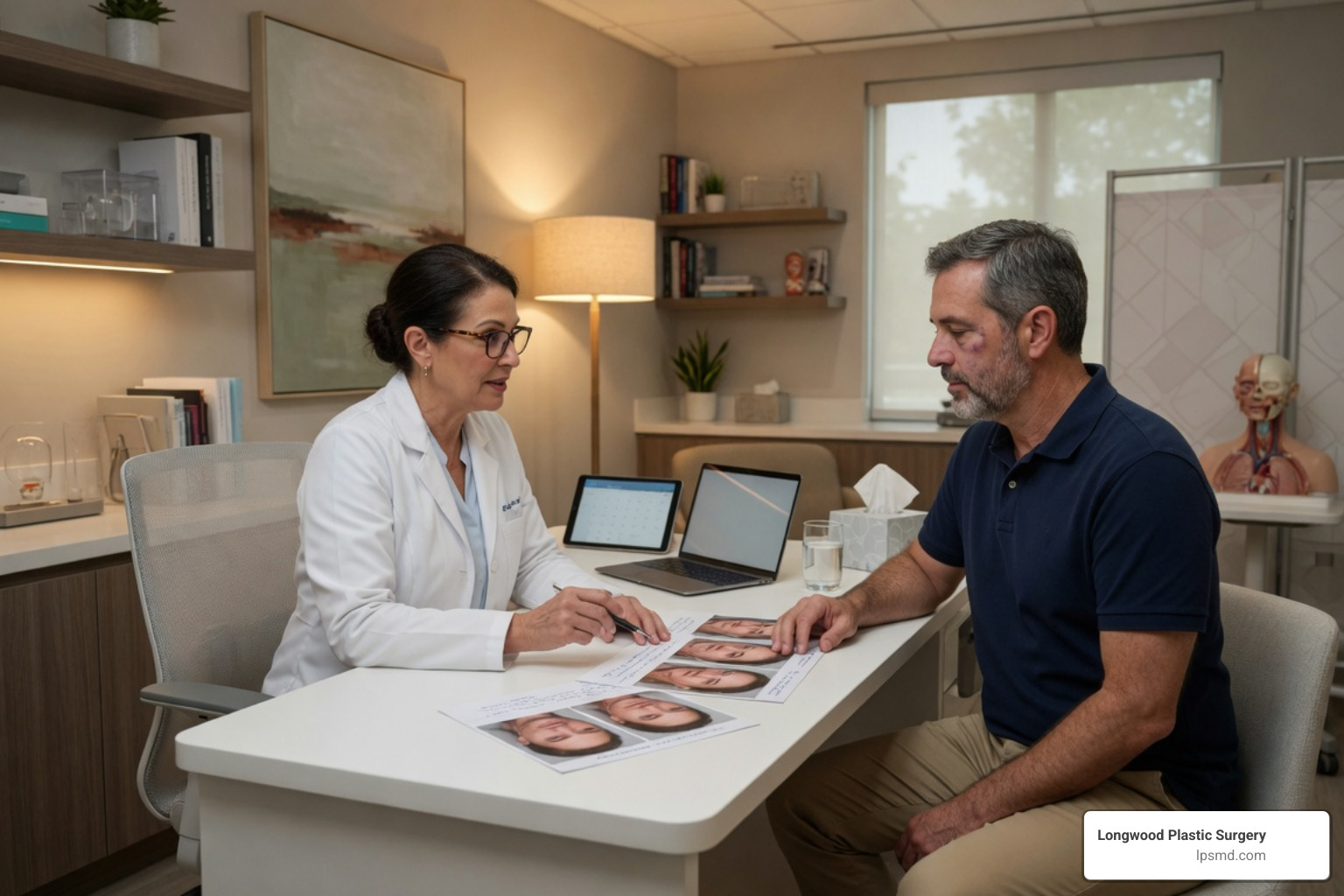
Ideal candidates for male aesthetic procedures are healthy individuals who maintain stable body weights, do not smoke (or are willing to pause smoking well ahead of surgery), and hold realistic expectations about what surgery can achieve. During the consultation phase, we evaluate your overall health profile, skin elasticity, and structural anatomy to ensure a customized treatment plan tailored to your specific goals.
A smooth recovery requires patience and adherence to post-operative instructions:
- Immediate Post-Op: Mild soreness, swelling, and temporary bruising are managed with prescribed medications, cold compresses, and head elevation.
- Early Healing: Most men return to non-strenuous desk jobs and everyday social interactions after early visible bruising subsides.
- Active Recovery: Light cardiovascular exercise can gradually resume, while heavy weightlifting, high-impact training, and strenuous workouts remain restricted until cleared by your surgical team.
- Long-Term Refinement: Residual, subtle swelling resolves over time, revealing final, well-defined contours and mature, faded scars.
Safety Considerations and Best Practices
Patient safety begins with choosing a board-certified plastic surgeon operating in fully accredited surgical facilities alongside experienced anesthesiology teams.
Comprehensive pre-operative evaluations ensure that all medications, supplements, and lifestyle habits are reviewed and optimized ahead of surgery. Meticulous surgical planning ensures incisions follow natural skin creases, anatomical shadows, and hair-bearing borders to keep incision lines discreet and facilitate seamless tissue healing. Strict adherence to post-operative care guidelines and ongoing follow-up appointments further support comfortable, predictable results.
Frequently Asked Questions About Male Aesthetics
How long is the typical recovery for male plastic surgery?
Most men need time away from work for facial procedures such as blepharoplasty or rhinoplasty, as well as for body procedures like gynecomastia correction. Strenuous weightlifting, contact sports, and vigorous physical exertion are paused during the early healing period to promote tissue recovery.
How do male facial surgeries preserve masculine features?
Preserving a masculine look requires keeping the surgical adjustments conservative and structurally supported. This includes maintaining a lower, straighter brow line, avoiding excess skin removal around the upper eyelids, sculpting a defined, chiseled jawline, and carefully concealing incisions along the natural beard and sideburn borders.
Are nonsurgical treatments enough to achieve significant contouring?
Nonsurgical treatments deliver noticeable, subtle improvements for mild concerns, such as softening forehead creases with Botox or smoothing fine lines with CO2 laser resurfacing and microneedling. However, when there is significant excess skin, true glandular tissue in the chest, or larger pockets of stubborn fat, surgery remains the gold standard for definitive, lasting contouring.
Conclusion
Aesthetic procedures for men continue to advance, offering reliable methods to enhance self-confidence, achieve an athletic physique, and restore a refreshed, masculine appearance. Successful results rely on personalized planning, a clear understanding of male anatomy, and close collaboration with skilled surgical providers.
At Longwood Plastic Surgery, our board-certified surgeons bring decades of combined experience delivering personalized, safe, and judgment-free care. Whether you are interested in nonsurgical skin rejuvenation or a targeted surgical procedure like male breast reduction, we invite you to contact Longwood Plastic Surgery to schedule your one-on-one consultation.
References
Lem M, Pham JT, Kim JK, Tang CJ. “Changing Aesthetic Surgery Interest in Men: An Eighteen-Year Analysis.” Aesthetic plastic surgery, 2023. PMCID PMC10187949.


