


Everything You Need to Know About Breast Changes After Weight Loss
Why Breasts Change After Weight Loss
Breasts after weight loss often become smaller, softer, or lower on the chest. This happens because breasts contain fatty tissue, and fat loss can reduce their volume. When skin and the internal support structures have been stretched, they may not fully tighten as volume decreases, which can lead to sagging, also called breast ptosis.
A few practical steps can help while weight is changing:
- Lose weight at a gradual, sustainable pace when possible.
- Wear a properly fitted supportive bra, especially during exercise.
- Eat enough protein and include strength training to preserve muscle and support posture.
- Wait until your weight is stable before deciding whether breast surgery is right for you.
The degree of change varies widely. Age, starting breast size, pregnancy history, genetics, smoking, sun exposure, and the speed and amount of weight loss can all affect skin elasticity and breast shape. Exercise can strengthen the chest muscles beneath the breasts, but it cannot replace lost breast fat or lift stretched breast tissue.
At Longwood Plastic Surgery, our board-certified surgeons help patients understand their options for breasts after weight loss with clear, judgment-free guidance focused on safe, realistic goals.
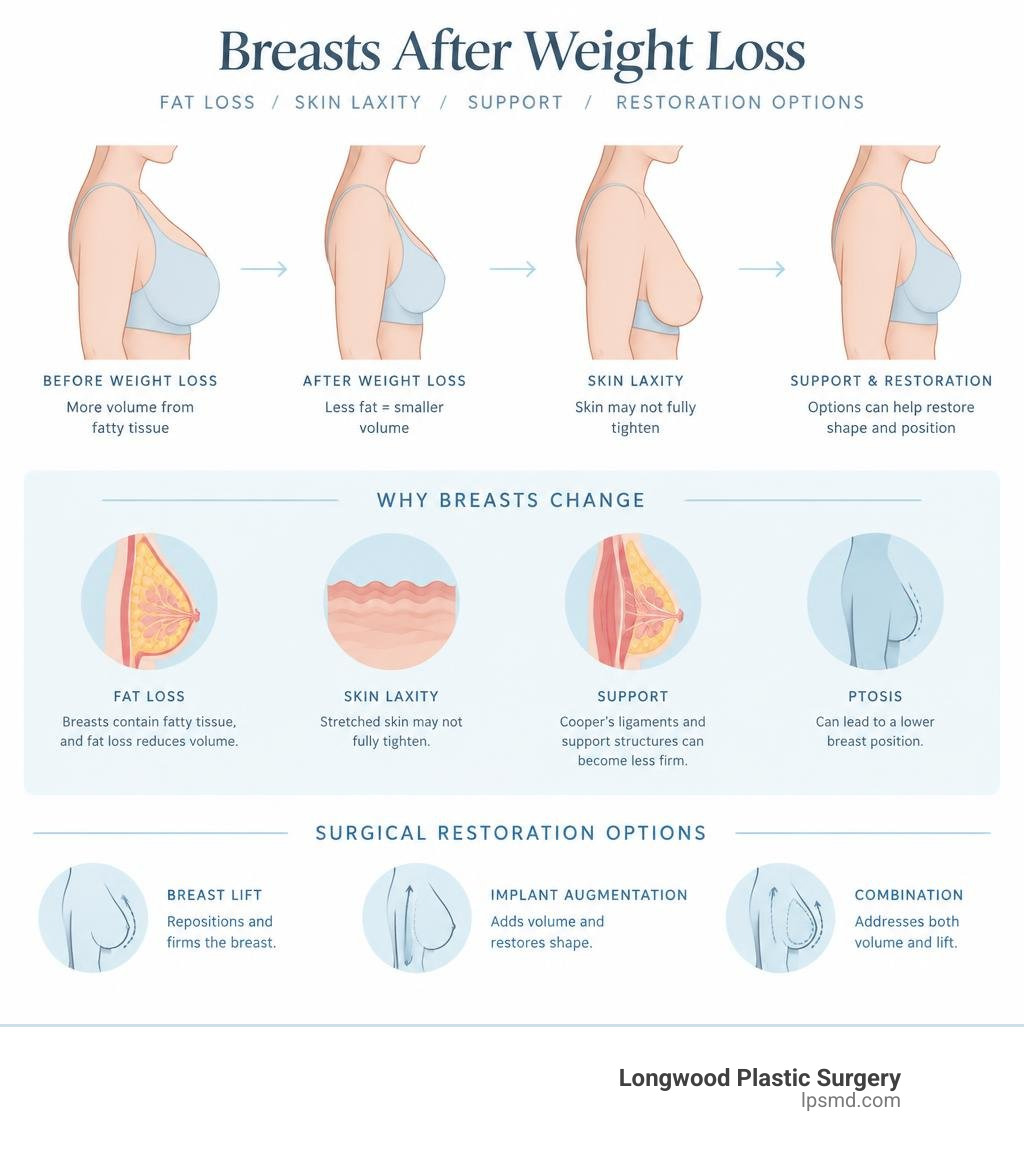
Understanding Breasts After Weight Loss: Anatomy, Fat Loss, and Ptosis
To understand why your chest contour shifts after dropping pounds, it helps to examine basic breast anatomy. The female breast consists primarily of two distinct tissue types: glandular tissue (the lobules and ducts responsible for milk production) and adipose (fatty) tissue. Surrounding and supporting these structures is a fibrous framework known as Cooper’s ligaments, along with an overlying envelope of skin.
In non-lactating individuals, adipose tissue makes up the vast majority of overall breast volume. When you burn more calories than you consume, systemic fat stores deplete evenly throughout the entire body. Because the body cannot selectively preserve chest fat, breasts inevitably reduce in size. Readers seeking deeper insight into this metabolic process often ask why do breasts get smaller after weight loss, and the direct answer lies in general fat mobilization.
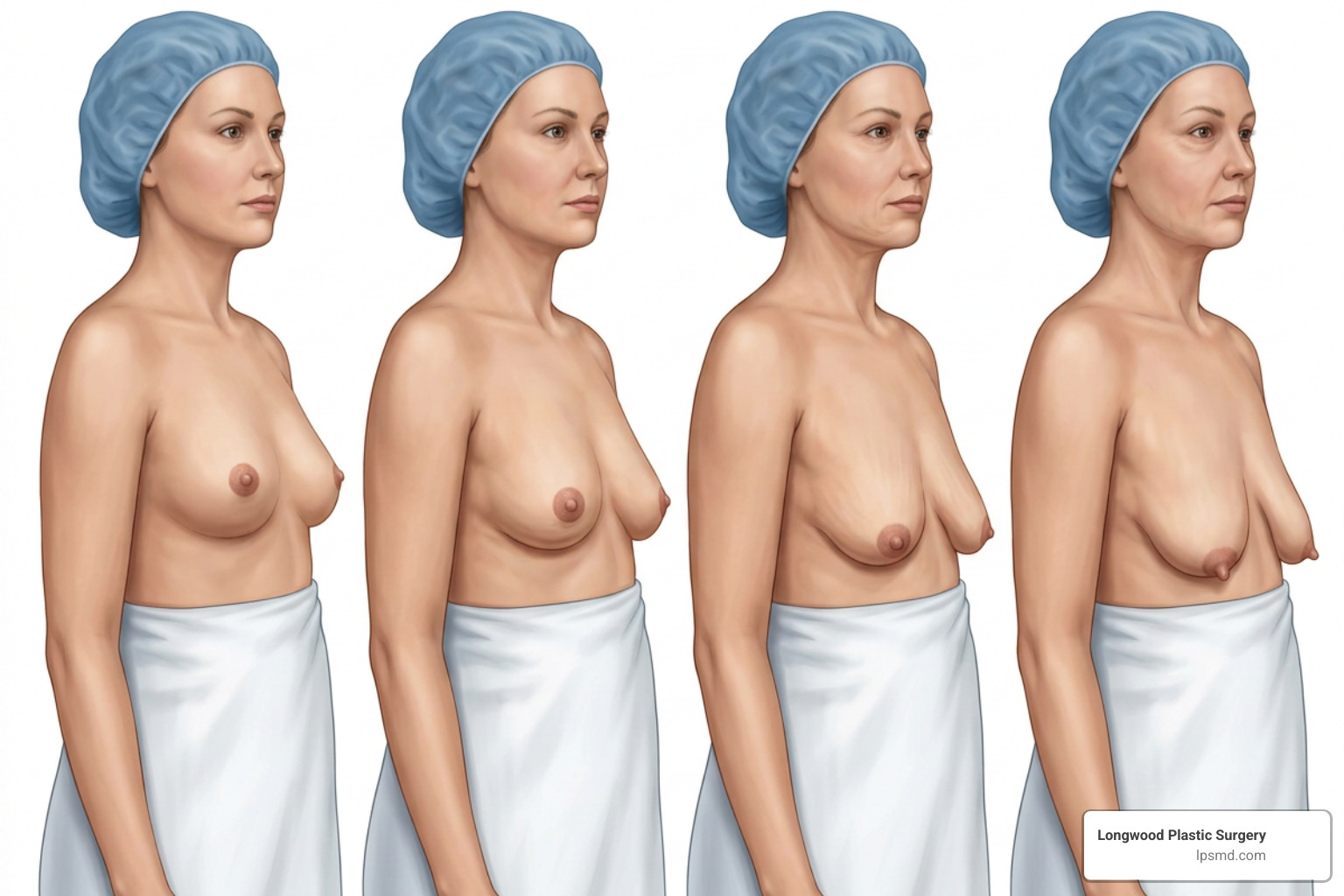
When substantial fat disappears quickly, the skin envelope and internal ligament network face an uphill battle. If the breast skin has been stretched for months or years over larger tissue volume, it often loses its structural snapback capacity. The result is deflation: an empty upper chest area, downward-pointing nipples, and skin laxity. External factors such as scientific research on GLP-1 volume loss highlight that modern medical weight-reduction pathways accelerate these structural transformations.
What Happens to Breasts After Weight Loss with GLP-1 Medications?
The modern era of weight management has seen incredible advancements through medications like semaglutide and tirzepatide. While these GLP-1 receptor agonists produce life-changing health outcomes, their rapid metabolic tempo creates specific aesthetic side effects often discussed online as deflation.
When body mass decreases rapidly, fatty stores across the upper body diminish before the skin matrix has adequate time to remodel naturally. This dynamic produces pronounced upper-pole flattening, leaving the top half of the chest looking scooped out or deflated like a partially emptied balloon. Clinical findings on tirzepatide breast volume changes indicate that greater total fat reduction directly correlates with dramatic shifts in cup size and breast firmness. It is crucial to remember that this change is purely a reflection of rapid fat loss rather than any direct medication toxicity to breast tissue.
Breast Ptosis Classification and Ligament Stretching
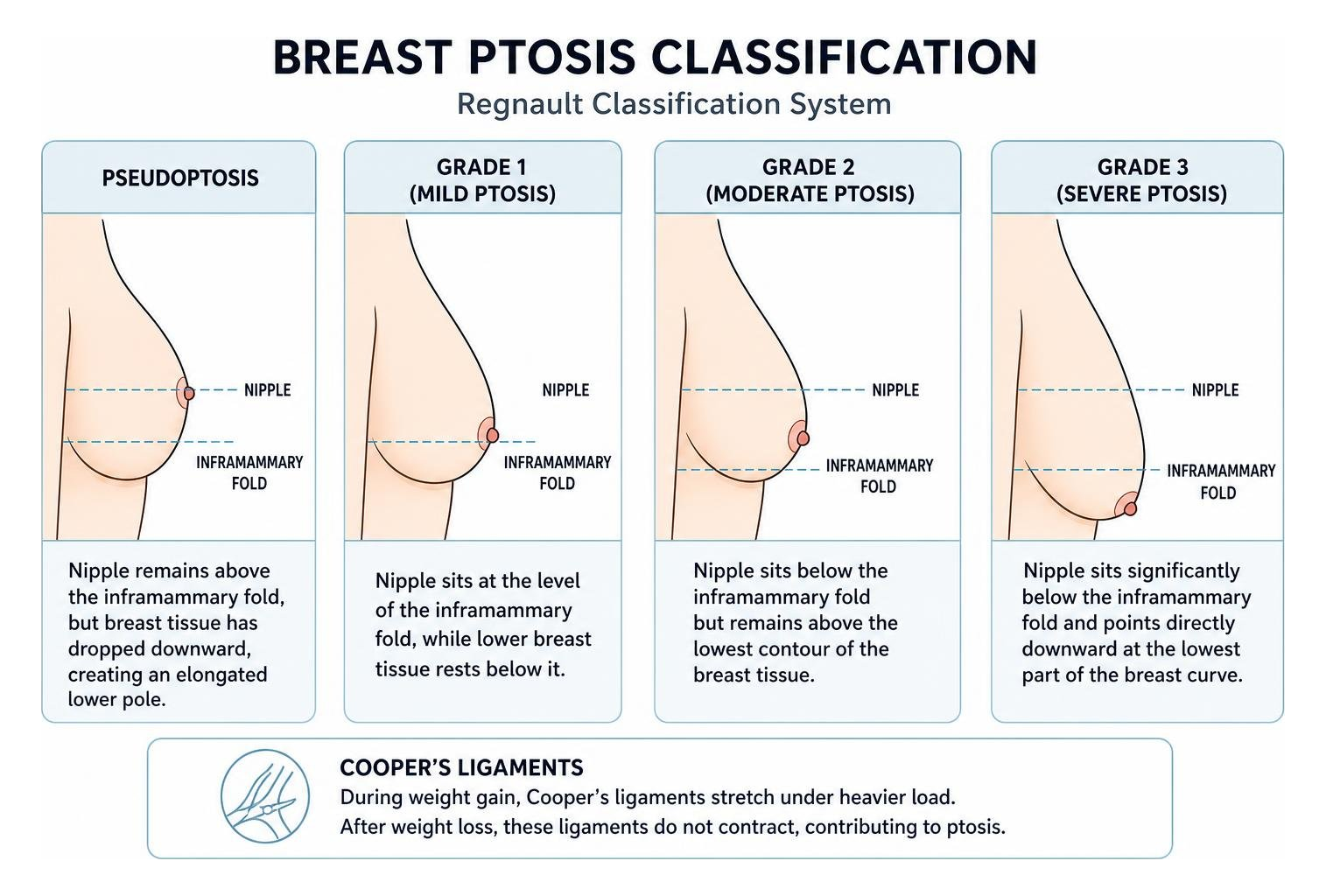
Plastic surgeons utilize a standardized medical framework known as the Regnault classification system to categorize breast sagging, or ptosis. This classification assesses the relationship between the nipple-areolar complex (NAC) and the inframammary fold (the natural crease beneath the breast):
- Grade 1 (Mild Ptosis): The nipple sits at the level of the inframammary fold, while lower breast tissue rests below it.
- Grade 2 (Moderate Ptosis): The nipple sits below the inframammary fold but remains above the lowest contour of the breast tissue.
- Grade 3 (Severe Ptosis): The nipple sits significantly below the inframammary fold and points directly downward at the lowest part of the breast curve.
- Pseudoptosis: The nipple remains positioned above the fold, but the glandular and fatty tissue has dropped downward, creating an elongated lower pole.
During periods of sustained weight gain, Cooper’s ligaments stretch under the heavier load. Once weight loss occurs, these fibrous bands cannot contract on their own. Restoring the nipple and breast tissue to a higher, more youthful position on the chest wall requires structural surgical support.
Surgical Options to Restore Breast Shape and Volume
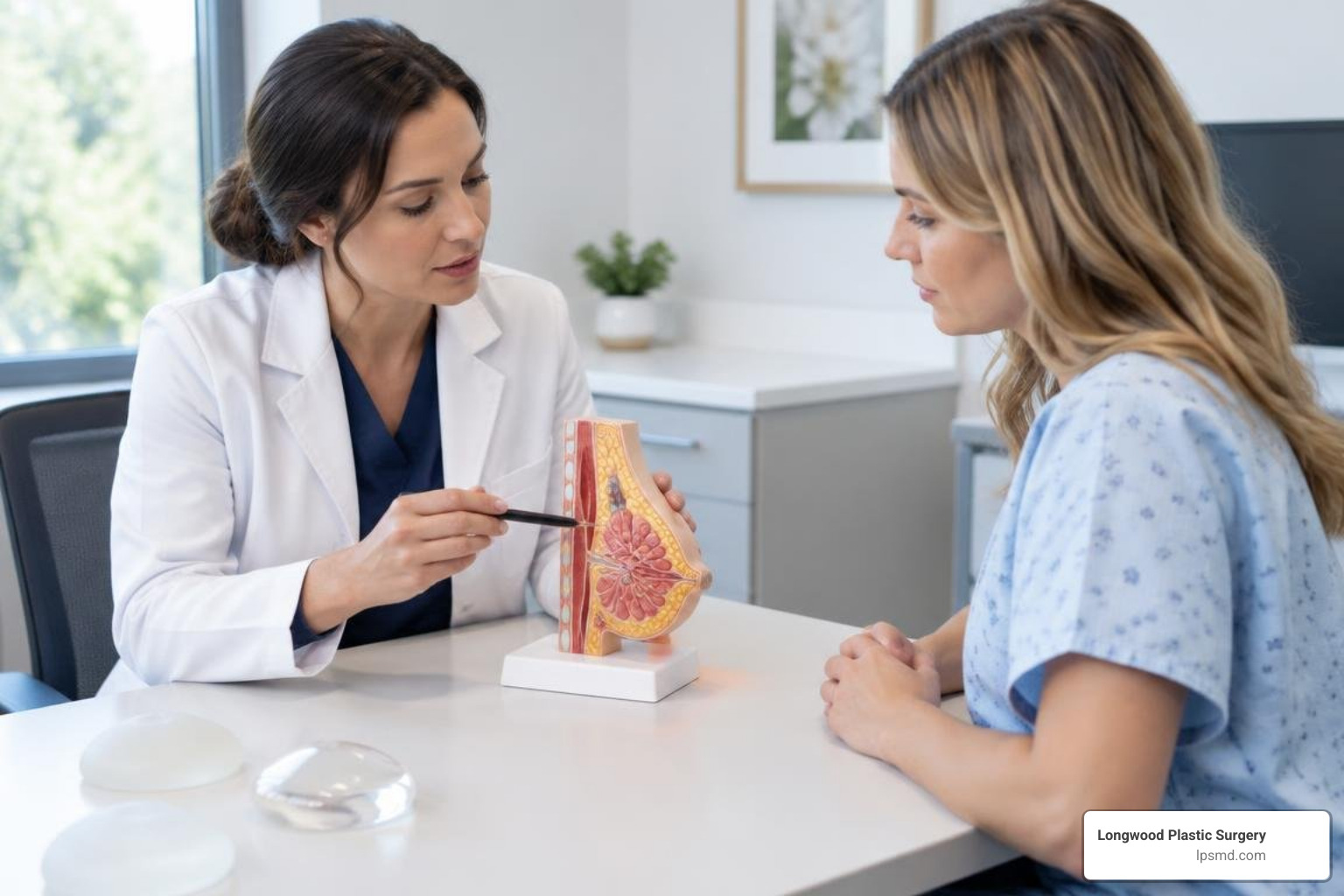
While healthy habits form the bedrock of overall wellness, surgery remains the definitive method to correct significant skin laxity, stretched ligaments, and deep volume depletion. At Longwood Plastic Surgery, our board-certified surgeons evaluate each patient individually in our Brookline office to craft a customized surgical plan.
| Surgical Procedure | Primary Objective | Best Suited For | Typical Incision Pattern |
|---|---|---|---|
| Mastopexy (Breast Lift) | Removes excess skin and raises nipple position | Sagging breasts with sufficient natural volume | Periareolar, lollipop (vertical), or anchor (inverted-T) |
| Breast Augmentation | Restores projection, firmness, and upper-pole fullness | Deflated breasts with minimal skin sagging | Inframammary, periareolar, or transaxillary |
| Augmentation-Mastopexy | Combines volume restoration with skin tightening and nipple repositioning | Severe deflation paired with moderate-to-severe ptosis | Vertical or inverted-T incision |
Mastopexy (Breast Lift)
A mastopexy reshapes the breast architecture by removing excess, stretched skin, lifting the remaining glandular tissue, and moving the nipple-areolar complex higher on the chest wall. If you want to understand what is a breast lift, think of it as tailored tailoring for the breast envelope.
During the procedure, your surgeon tightens deep internal tissues to create a firmer conical foundation. We also reduce oversized areolas that often stretch during weight fluctuations. To learn more about surgical techniques and incision options, explore how a breast lift works to see how tailored incision designs match individual body shapes.
Breast Augmentation with Implants or Fat Transfer
When weight loss leaves the breasts significantly smaller but skin elasticity remains relatively intact, breast augmentation alone can rebuild lost volume. Patients experiencing smaller breasts after weight loss: how breast augmentation can help often choose between silicone or saline implants, or autologous fat grafting.
Silicone implants offer a natural texture and reliable upper-pole projection, refilling the emptied chest frame. Autologous fat grafting uses liposuction to harvest fat from areas like the thighs or abdomen, purifying the cells, and injecting them into the breasts. While fat grafting provides subtle, natural enhancement, implants deliver more dramatic volume restoration. Reviewing the full range of breast augmentation benefits helps patients determine if volume replacement fits their aesthetic ideals.
Combination Mastopexy-Augmentation
For many post-weight-loss patients, addressing skin excess without restoring volume leaves the chest looking flat, while adding an implant without tightening skin creates a heavy, bottomed-out appearance. A breast augmentation and lift combination solves both concerns in a single operation.
In this coordinated procedure, the surgeon creates a secure pocket (often beneath the pectoralis major muscle) for the implant, while simultaneously excising redundant skin and elevating the nipple. When deciding on the right approach, comparing breast lift vs breast augmentation allows you to weigh the visual balance of projection versus skin reduction.
Comprehensive Post-Weight-Loss Contouring
Major weight loss often alters the entire torso, creating skin laxity across the abdomen, flanks, back, and breasts simultaneously. For comprehensive rejuvenation, breast procedures can be paired with abdominal contouring.
Patients frequently ask what is a mommy makeover, which combines breast enhancement with tummy tuck surgery to restore the central body profile. For individuals who have undergone bariatric surgery or significant lifestyle-driven changes, removing excess skin after massive weight loss can complete the physical transformation and enhance daily comfort.
Non-Surgical Support and Preserving Skin Elasticity
While surgery provides anatomical correction, non-surgical measures play a vital supporting role during active weight loss and long-term maintenance. Supporting skin health and strengthening underlying musculature optimizes your overall silhouette.
Maintaining Skin Elasticity and Breasts After Weight Loss
Skin contains collagen and elastin fibers that dictate how well it retracts as volume shifts. You can support these structural proteins through targeted daily habits:
- Prioritize Protein Intake: Consuming adequate daily dietary protein supplies the essential amino acids required for collagen synthesis and tissue repair.
- Sun Protection: Ultraviolet radiation degrades collagen fibers rapidly. Protect exposed chest and cleavage skin with broad-spectrum sunscreen.
- Hydration and Topical Care: Keep skin hydrated with rich moisturizers containing ceramides, hyaluronic acid, or gentle retinoids that encourage cellular turnover.
- Paced Weight Loss: Slower, steady reductions give the dermal matrix time to adapt, minimizing extreme stretching.
To complement home care, exploring medical-grade options for skin tightening after weight loss can help improve superficial skin quality and texture.
Conclusion
Losing weight is a profound milestone for your overall health, vitality, and longevity. If changes to your chest contour leave you feeling disconnected from your new body, specialized surgical solutions can help restore balance, proportion, and self-confidence.
At Longwood Plastic Surgery, our board-certified plastic surgeons bring more than fifty years of combined surgical expertise to patients throughout Brookline, Boston, and the greater New England region. We believe in providing clear, judgment-free consultations tailored to your unique anatomical goals. When you are ready to explore your aesthetic options, schedule a consultation to learn how much a breast lift costs and begin your journey toward a refreshed, harmonious shape.


